_logo.webp)
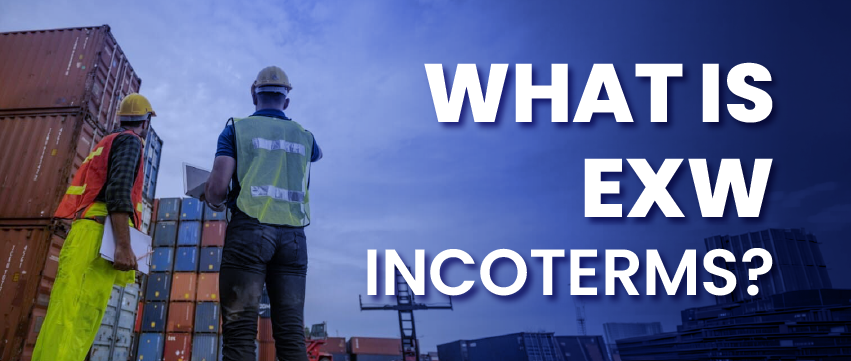
What is EXW Incoterms?
Table of Contents
In international trade, delivery terms define who is responsible for transportation, costs, and risks at each stage of the shipping process. EXW Incoterms represents one of the most common international trade terms which people tend to misunderstand despite its widespread usage. To fully understand global shipping contracts, it is essential to know the EXW incoterms definition, the EXW incoterms meaning, and how EXW incoterms explained differs from other delivery rules.
The EXW meaning stands for “Ex Works,” which means the seller makes the goods available at their premises, and the buyer is responsible for everything from that point onward. In practice, an EXW shipment places the maximum responsibility on the buyer and minimal obligation on the seller.
Companies need to understand EXW shipping terms because this knowledge protects them from expensive miscommunications that occur during worldwide transportation operations and customs clearance and insurance processes.
What Does Ex Works Mean in Incoterms?
The Incoterms rules define Ex Works (EXW) as the delivery term which requires the seller to handle the least amount of responsibility. According to the official EXW incoterms definition, the seller’s obligation ends when the goods are made available at a named place, such as a factory, warehouse, or office.
The buyer takes full responsibility for:
- Loading the goods
- Arranging transport
- Export customs clearance
- Import clearance
- Insurance
- Risk of loss or damage
The EXW incoterm meaning is simple: the seller does not deliver the goods; the buyer collects them.
When EXW incoterms are explained clearly, it becomes obvious that this term favors sellers and requires buyers to have strong logistics capabilities.
What Does "Ex Works" Mean for Shipping?
From a shipping perspective, "EXW" meaning in shipping refers to a scenario where the seller does not participate in the transport process. The seller simply prepares the goods and makes them available.
In real logistics operations, an EXW shipment means the buyer must:
- Organize pickup
- Hire freight forwarders
- Handle export documentation
- Pay all transport costs
- Bear transit risks
This is why EXW is usually recommended only for experienced buyers who have access to professional logistics partners.
The EXW incoterms explained model is widely used in domestic trade and in transactions where the buyer has full control over shipping arrangements.
Why is Important Ex Works?
The EXW term gives buyers unrestricted control over their activities yet sellers must perform the fewest possible obligations. The system lets producers focus on their manufacturing work because it handles transportation needs while customers maintain full control to manage their delivery process.
Key reasons why EXW is important:
- Simplifies seller’s obligations
- Reduces seller’s legal exposure
- Provides buyer with full logistics control
- Enables customized transport planning
- Supports multimodal shipping strategies
The EXW incoterm meaning is particularly attractive in highly competitive markets where sellers want to avoid operational complexity.
However, the importance of EXW depends heavily on the buyer’s ability to manage freight and compliance.
Responsibilities Under Ex Works
The responsibilities under EXW are clearly divided between the buyer and the seller.
Buyer's Responsibilities
Under EXW incoterms, the buyer is responsible for almost everything:
- Collecting goods from seller’s location
- Loading cargo onto vehicles
- Arranging international transport
- Export customs clearance
- Import customs clearance
- Insurance coverage
- Paying duties and taxes
- Managing all transit risks
In an EXW shipment, the buyer carries full financial and legal responsibility from the moment goods are made available.
Buyers need to select dependable logistics companies, while they must handle their documentation systems effectively at this stage of responsibility.
Seller's Responsibilities
The seller’s responsibilities under the EXW Incoterms definition are limited:
- Prepare goods according to contract
- Package goods properly
- Make goods available at agreed location
- Provide commercial invoice
The seller is not required to:
- Load goods
- Clear export customs
- Arrange transport
- Provide insurance
This makes EXW the least demanding Incoterm for sellers.
Advantages and Disadvantages of Ex Works
Like all Incoterms, EXW has both benefits and drawbacks.
Advantages
- Maximum control for buyer
- Minimal responsibility for seller
- Flexible logistics planning
- Lower seller costs
- Suitable for domestic trade
Disadvantages
- High operational burden for buyer
- Export clearance complications
- Higher risk exposure
- Requires strong logistics knowledge
- Not ideal for inexperienced buyers
The EXW incoterms explained model shows that EXW works best when buyers are well-established and familiar with international trade procedures.
What Is the Difference Between Ex Works and FOB?
EXW and FOB differ significantly in terms of responsibility and risk transfer.
Under EXW:
- Seller makes goods available
- Buyer handles everything else
Under FOB:
- Seller delivers goods onto vessel
- Seller handles export clearance
- Risk transfers at port of shipment
FOB provides more support to the buyer and is often preferred in international sea freight.
The exw incoterms meaning places far more responsibility on buyers compared to FOB.
What Is the Difference Between Ex Works and FCA?
FCA (Free Carrier) is often considered a better alternative to EXW.
Under FCA:
- Seller delivers goods to carrier
- Seller handles export clearance
- Risk transfers at handover
Under EXW:
- Seller only makes goods available
- Buyer handles export clearance
The EXW incoterms definition shows that FCA offers a more balanced risk structure, especially in cross-border trade.
Many logistics professionals recommend FCA instead of EXW for international shipments.
OPCA Supporting EXW Logistics Globally
OPCA members support companies managing complex exw shipment operations worldwide. The buyer must handle all responsibilities under EXW so they need to establish professional logistics systems.
Businesses can access reliable freight forwarders through OPCA's trusted list of freight forwarders who manage pickup operations and export clearance and international transportation services.
The members of OPCA deliver complete logistics services which maintain regulatory compliance and precise documentation and protect against risks during exw incoterms transactions.
Their knowledge base allows customers to use EXW shipping terms safely when they move goods between different international trade routes.
EXW Incoterms FAQ
What does EXW mean in shipping terms?
The EXW term stands for Ex Works. The seller provides access to the goods but the buyer must handle all transportation needs and customs procedures and bear all associated risks.
Who pays for shipping on EXW?
The buyer needs to pay for every expense related to shipping and handling and insurance coverage and customs clearance fees.
What is better, FOB or EXW?
The FOB system provides advantages to international trade because it makes the seller responsible for both export clearance procedures and vessel loading operations.
Which is better between EXW and cif?
The CIF shipping method protects new customers better because it allows the seller to pay for shipping and insurance but EXW requires the buyer to take full responsibility for all aspects of the transaction.