_logo.webp)
What is Lift On, Lift Off (LOLO) in Shipping?
Table of Contents
In the shipping industry different methods of cargo handling are used. In many cases breakbulk, heavy machinery, and oversized project cargo are handled by using the Lift On, Lift Off (LOLO) method. For people involved in logistics, project cargo, and importing of goods that are too large to be transported as regular non-containerized cargo, it is important to know the LOLO meaning in shipping and the practical application of LOLO cargo handling.
The shipping term LOLO stands for Lift On / Lift Off. This is in contrast to Roll-on/Roll-off (RORO) cargo, which can be driven onto a lift-on/lift-off vessel. The Lift On / Lift Off (LOLO) method of cargo handling is the most common for handling breakbulk cargo, heavy machinery, and large quantities of oversized equipment. A thorough knowledge of LOLO meaning in shipping, how LOLO cargo is handled, and the various areas where LOLO is used is vital for any person involved in the field of logistics, for project cargo specialists, and for importers of non-containerized cargo.
With today’s global economy in place, most of the world’s ports are designed to handle both project and conventional cargo. Therefore, knowing the LOLO meaning in shipping enables a company to pick the best shipping solution to transport a load in a cost-effective and low-risk manner.
What Does LOLO Mean in Shipping?
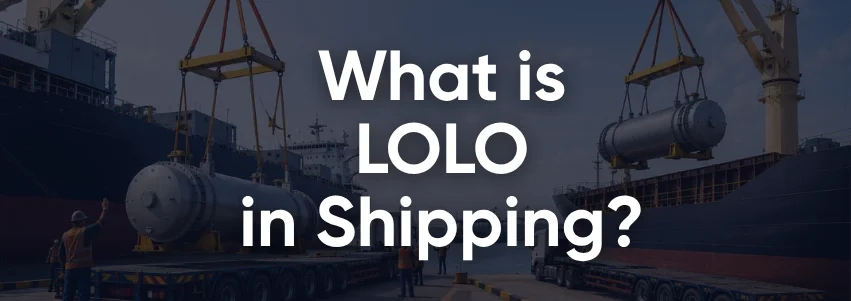
In logistics, LOLO stands for "Lift On, Lift Off." As opposed to roll-on/roll-off or lift-on/shift-off cargo, it is lifted on and off the ship with cranes.
Lift on, lift off meaning in the shipping term LOLO refers to the way that cargo is handled. It does not refer to the type of ship that will be transporting the goods. As described above, the cargo will be lifted on at the port of departure and lifted off at the port of destination.
In shipping, the term LOLO is of great significance for project cargo logistics. Most heavy and oversized objects cannot be moved with the common means of transport. Thus, the way of lift-on/lift-off is the only possibility to handle and transport these kinds of cargo pieces.
Examples of cargo commonly handled through LOLO operations include:
- Wind turbine components
- Industrial generators
- Construction machinery
- Steel structures
- Transformers
- Manufacturing equipment
- Large pipes and tanks
- Offshore modules
Lift-on/lift-off (lo-lo) vessels have their own onboard cranes or use the cranes at the terminal where the vessel is loading and discharging. These types of vessels are designed to carry very large loads of break bulk of any shape and size.
Lift on lift off, or containers handled using lift on lift off containers, are typically moved using lift on lift off container cranes within a terminal of a port to move the containers between ships and the terminal.
Understanding "lolo" in shipping terms is important for many companies that specialize in breakbulk and heavy-lift logistics services.
How Does Lift On Lift Off Shipping Work?
LOLO shipping follows a structured process that requires careful planning and coordination between carriers, port operators, and freight forwarders.
The process generally includes the following stages:
1. Cargo arrives at the terminal.
2. Cargo inspections and documentation are completed.
3. Cranes lift the cargo from the terminal area.
4. The cargo is positioned inside the vessel hold or on deck.
5. Cargo securing and lashing operations are performed.
6. The vessel transports the cargo to the destination port.
7. At arrival, cranes lift the cargo off the vessel.
8. The cargo is transferred to trucks or storage facilities.
The way LOLO (lift on, lift off) operations are conducted is greatly dependent on a number of factors, including a good lifting plan, the dimensions of the cargo and the cargo’s center of gravity, and a good method of securing the lifted cargo at sea.
Many modern vessels for lift-on/lift-off operations are equipped with onboard heavy-lift cranes, which are capable of lifting individual units of hundreds of tons. For many types of heavy cargo, however, even they are not of any use and have to be lifted with shore cranes in the terminal.
Project cargo movements are surveyed and thoroughly investigated by engineering prior to actual loading of the cargo to ensure that the safest possible method of lifting can be employed and that all safety regulations will be fully complied with to prevent any possible damage to the project cargo during the lifting operation.
Lift on lift off (LOLO) operations on a modern lift on lift off vessel can be performed by onboard heavy-lift cranes that can lift very heavy units. Often, however, shore cranes are specialized enough to perform the lift-on, lift-off operation.
Also, LOLO operations of heavy cargo that require their own lift gear are even more complex and need more planning than a normal container requires for lift-off and re-load.
Advantages and Disadvantages of LOLO Shipping
LOLO shipping offers several important benefits but also comes with operational challenges that companies should consider before selecting this transport method.
Advantages
One of the biggest advantages of LOLO shipping is flexibility. Since cargo does not need wheels or self-propulsion systems, almost any oversized or irregularly shaped equipment can be transported.
Additional advantages include:
- Suitable for oversized and heavy cargo.
- Supports breakbulk and project cargo operations.
- Allows transportation of cargo that cannot fit into containers.
- Enables efficient handling of industrial equipment.
- Widely available in major international ports.
- Supports both containerized and non-containerized cargo.
A lift-on/lift-off ship can transport equipment that would otherwise require disassembly or alternative transportation methods.
LOLO Shipping also offers greater security to cargoes. As a lift on / lift off operation, LOLO is generally handled by very experienced personnel in order to minimize handling and thus any potential damage.
Disadvantages
Despite its advantages, LOLO shipping also has several limitations:
- Higher terminal handling costs.
- Dependence on crane availability.
- Longer loading and unloading times.
- Increased operational complexity.
- Additional engineering and planning requirements.
The most significant challenge often involves LOLO charges in shipping, which can increase overall transportation costs.
It also has to be considered that LOLO has a different price than other means of transport. Of course most of the different types of cargo can be lifted with LOLO, but for most of them there are specialized means of transport as well as cranes. In the long run it is even cheaper to transport cargo with different means of transport.
Bad weather also can impact the schedule for the lifts for the heaviest of project cargo.
What is LOLO Charges in Shipping?
One of the most common questions in project logistics concerns LOLO charges in shipping.
LOLO charges refer to the fees associated with lifting cargo onto and off the vessel. These charges cover the use of cranes, terminal equipment, labor, and cargo handling services.
Typical lift-on/lift-off charges include:
- Port crane usage fees
- Terminal handling charges
- Stevedoring services
- Cargo lashing and securing
- Equipment rental
- Heavy-lift engineering support
The amount of LOLO charges in shipping depends on several variables:
- Cargo dimensions
- Weight of the shipment
- Number of lifts required
- Port infrastructure
- Crane capacity requirements
A further cost related to lift on lift off for oversized project cargo is the lift on lift off charges.
The costs for lift-on/lift-off for oversized project cargo transportation can be extreme and form a large portion of the overall costs for the transportation of oversized project cargo. It is in the best interest of companies that specialize in the heavy-lift transport of project cargo to obtain a detailed quote for the lift-on/lift-off costs for the oversized project cargo that they transport.
By knowing the lift-on/lift-off charges, the project manager can establish a more accurate budget for the execution of the cargo and avoid any unexpected costs.
LOLO vs RORO: What’s the Difference?
LOLO and RORO are two fundamentally different cargo handling methods.
LOLO operations rely on cranes and lifting equipment, while RORO operations depend on wheeled cargo that can be driven onto the vessel.
The main differences include:
LOLO
- Cargo is lifted by crane
- Suitable for heavy project cargo
- Requires lifting equipment
- Longer handling times
- Higher handling complexity
RORO
- Cargo is driven onto the vessel
- Suitable for vehicles and wheeled cargo
- Requires ramps
- Faster loading process
- Simpler terminal operations
LOLO is preferred for:
- Transformers
- Wind turbines
- Industrial machinery
- Steel structures
- Project cargo
RORO is preferred for:
- Cars
- Trucks
- Buses
- Construction vehicles
- Agricultural machinery
The choice between LOLO and RORO depends primarily on the physical characteristics of the cargo.
For companies handling oversized industrial projects, LOLO remains the preferred option because many cargo units simply cannot be driven onto a vessel.
OPCA Members Supporting LOLO Operations
Complex LOLO projects require experienced logistics professionals who understand heavy-lift engineering, port operations, and cargo handling procedures.
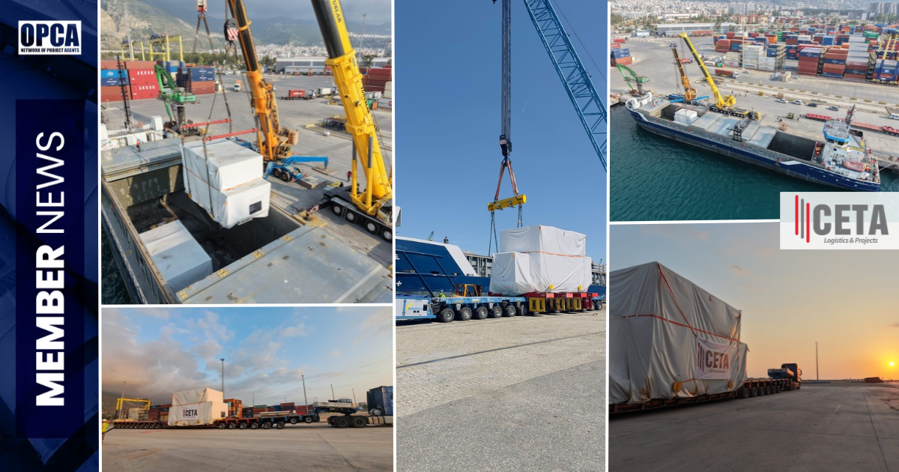
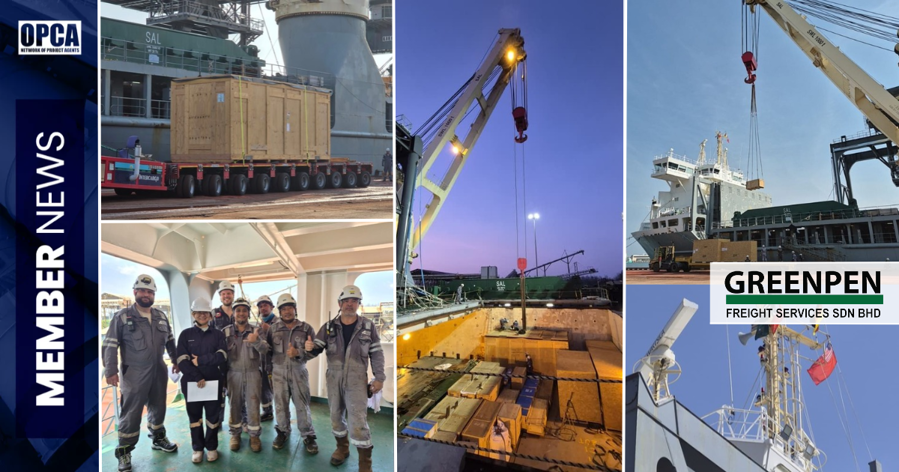
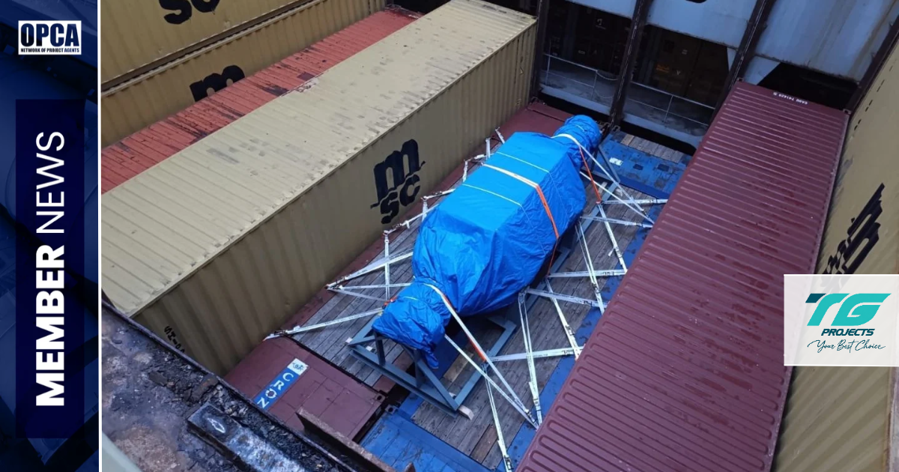
OPCA members specialize in project logistics and regularly coordinate lift-on/lift-off operations across major ports worldwide. Their expertise includes route surveys, lifting plans, cargo securing, and multimodal transport coordination.
Through OPCA's global network and the international freight forwarders directory, companies can connect with trusted logistics providers capable of managing sophisticated LOLO projects from planning to final delivery.
Whether handling power generation equipment, refinery modules, or manufacturing machinery, OPCA members provide the technical knowledge required for successful LOLO transportation.
Their experience helps businesses reduce risk, optimize costs, and ensure compliance with international safety standards.
Frequently Asked Questions About LOLO in Shipping
What are some examples of breakbulk cargo suited for LOLO?
Common examples include transformers, generators, steel beams, industrial machinery, wind turbine components, tanks, pipes, and construction equipment. These cargo types often exceed standard container dimensions and require crane handling.
What are the cost differences between LOLO and RORO shipping?
LOLO operations generally involve higher handling costs because cranes, engineering support, and specialized equipment are required. RORO shipping is often cheaper for vehicles because cargo can simply be driven on and off the vessel without lifting operations.
What is the difference between Lolo and Roro shipping?
The primary difference lies in cargo handling methods. LOLO cargo is lifted using cranes, while RORO cargo uses ramps and wheeled movement systems. LOLO is best suited for heavy project cargo, whereas RORO is primarily used for vehicles and mobile equipment.